If you have raised a concern with a struggling team member once, been declined, and then stopped raising it because raising it again became socially expensive, this piece is for you. What happened in that space between the first raising and the not-raising is the exact mechanism that produces the worst outcomes leaders point to later and say “there was no way to know.”
I want to be precise about what happened, because imprecision would make this easier to tell and less useful to read.
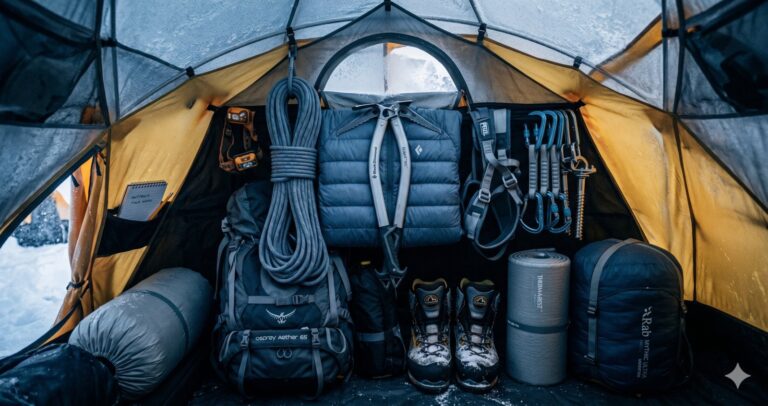
My friend’s knees started going on day three. Not dramatically. A gradual, worsening pain that changed his pace first and then, in the second week, changed the geometry of the group entirely. We encouraged him to leave the trail at one of the early exit points. There are not many on the John Muir Trail. It runs through wilderness that does not offer frequent off-ramps. But they exist, and we named them to him, and he declined each one.
He kept hiking.
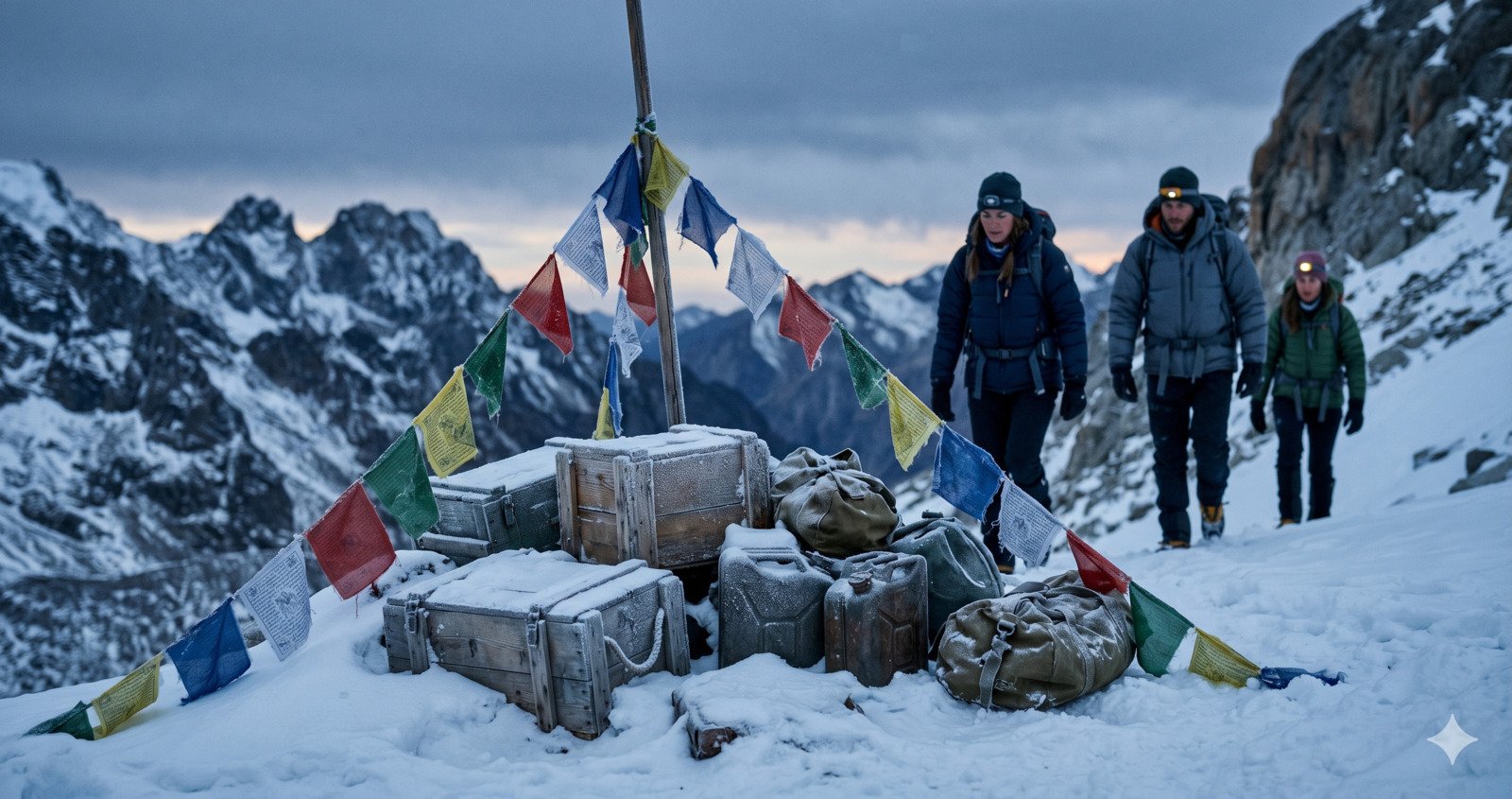
In the last week, he was trailing us by two, sometimes three hours. We would arrive at a campsite by seven or eight in the evening, eat, and wait. He would arrive at ten, eleven, sometimes midnight. We would see his headlamp coming in the distance, and then he would arrive, and we would have been there for two or three hours already.
My other friend and I have a good hiking pace. We like to move. We wanted to arrive at the campsite while there was still time to eat properly and sleep enough. These are legitimate needs. I am not going to pretend otherwise.
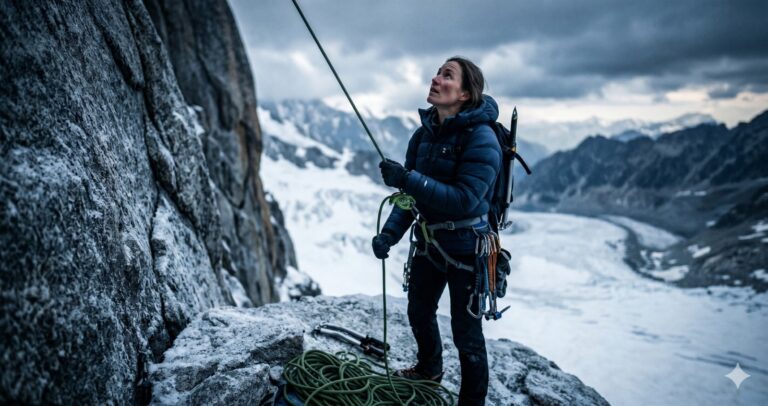
But here is what I have thought about since. We saw very few people on that section of the trail. The wilderness was genuine wilderness. Remote, without reliable cell coverage, without the casual foot traffic that would mean a fallen hiker would be found quickly. His knees were getting worse, not better. He was hiking alone, in the dark, for hours at a time, in terrain that was demanding enough when we hiked it together.
If he had fallen, he might have waited a long time for help.
He did not fall. He finished the trail. He made it, and the completion was his in a way it might not have been if we had stayed with him or persuaded him to leave. I do not take that from him.
But I do not feel entirely good about how we got there.
The decision we made
We made a decision, my other friend and I, though we did not name it as a decision at the time. We decided that our pace was a legitimate need that outweighed the collective responsibility to move at the speed of the slowest member of the group.
This is a real organizational decision with a real name. The prioritization of individual velocity over collective safety. The mechanism is named elsewhere in this framework. The fast climber who surges ahead causes the rope to go slack and then snap taut, destabilizing the person behind them. But this case is more complicated than that argument allows for, because the friend with the bad knees had explicitly declined to leave the trail, explicitly refused to slow us down, and explicitly accepted the arrangement as it was.
He made a choice. We honored it. This is not nothing.
What I find harder to dismiss is the risk that his choice created for him that he may not have fully assessed. And that we, seeing the terrain and the pace and the isolation more clearly than he could from inside his own determination to finish, could have named more directly than we did.
We did not lie to him. We did not abandon him. We told him it was OK to leave. He said he was fine. We believed him, or we chose to believe him, or we were willing to be persuaded by his insistence because it aligned with what we wanted to do anyway.
This is the precise mechanism of the Ceasefire. The consensus that forms not because the concern has been genuinely resolved but because raising it again has a social cost that nobody wants to pay. We raised it at each exit point. He declined. We stopped raising it. The trail continued.
“We raised the concern at each exit point. He declined. We stopped raising it. The trail continued. This is the Ceasefire.”
What the knees were saying
There is a version of this story where my friend’s determination to finish the trail despite his knees is the leadership lesson. The commitment to completion, the refusal to let pain determine the outcome, the will that carries you to the end when the body is failing.
This version is not wrong. It describes something real about what he did.
It is also the version that is most comfortable for me to tell, because it makes his choice the explanation for the outcome and removes the question of what I could have done differently.
The version I find harder to sit with. His knees were giving him information that his determination was filtering. The information was: this is getting worse, not better, and the terrain ahead is not less demanding than the terrain behind. The determination was: I came here to finish this trail and I am going to finish it.
Determination is not a substitute for accurate assessment. It is a specific override of accurate assessment. A cognitive commitment to proceeding that makes the incoming information harder to process cleanly. The person with the most determination is often the person with the least accurate read of their own condition, precisely because the determination is doing the work that the accurate read would otherwise do.
The leader who sees a team member’s determination overriding their accurate self-assessment has a specific responsibility. Not to make the decision for them, but to name what the data is saying clearly enough that the determination has to reckon with it rather than simply suppress it.
We named it at the exit points. We stopped naming it when the exit points passed.
The distance
I have thought about why we stopped naming it, and the honest answer is not flattering.
After a certain point, the exits were behind us and the concern became hypothetical. He would not leave the trail regardless of what we said, so what was the point of saying it? This reasoning is real and it is wrong. The concern did not become less valid because the exits had passed. The isolation did not decrease. The pace gap did not close. The risk remained precisely as it was. What changed was not the situation but the cost of raising it. Which had gone from “he might leave the trail” to “we will have an uncomfortable conversation about something neither of us can change.”
We chose the comfort of not having that conversation. I am naming this because it is the mechanism, and naming mechanisms is what this framework exists to do.
The organizational version. The concern that is raised once, declined, and then never raised again. Not because it has been resolved but because the raising of it has become socially expensive and the situation has evolved past the point where the easy interventions are still available. The team member who is on the wrong project, the strategy that is not working, the relationship that is damaging the organization. Each of these has exit points, and at each exit point the concern can be raised, and after enough exit points have passed the concern becomes the thing we have all agreed, without agreeing, not to discuss.
The trail does not offer exit points forever. Neither do organizations.
What this cost
He made it. The trail is complete. His determination was real and it carried him through something that his knees said was not possible.
I am glad he finished. I am not glad that he hiked alone in the dark for hours at a time, in genuine wilderness, for days, because we had a hiking pace we wanted to maintain.
A good outcome does not retroactively validate every decision that led to it, and a decision that could have gone badly remains a decision that could have gone badly even when it didn’t.
We left him behind. He was fine. I don’t think we should have left him behind.
THE TEAM TEST
Think about the last time a team member was struggling. Falling behind, carrying something that was getting worse not better, declining the offer to exit a commitment that was costing them more than they were acknowledging.
Now ask: at what point did you stop raising the concern? Not the first time you raised it. The point at which you decided you had raised it enough and it was now their choice and you were going to proceed at your own pace.
Was that decision made because the concern had been genuinely resolved? Or because the exit points had passed and the cost of raising it again exceeded the social comfort of not raising it?
And the hardest question: if the outcome had been different, if the headlamp had stopped moving in the dark and stayed stopped, would you be able to say clearly that you did what you could with what you knew?\
The trail does not offer exit points forever. Name the concern while they still exist. Not once. As many times as the concern is present.
The headlamp in the dark is not evidence that everything is fine. It is evidence that they are still moving.