I If your organization runs through a small number of key people and the retention conversations about them keep you up at night, this piece is for you. What feels like an asset (one indispensable leader everyone depends on) is a single point of failure dressed up in a retention bonus.
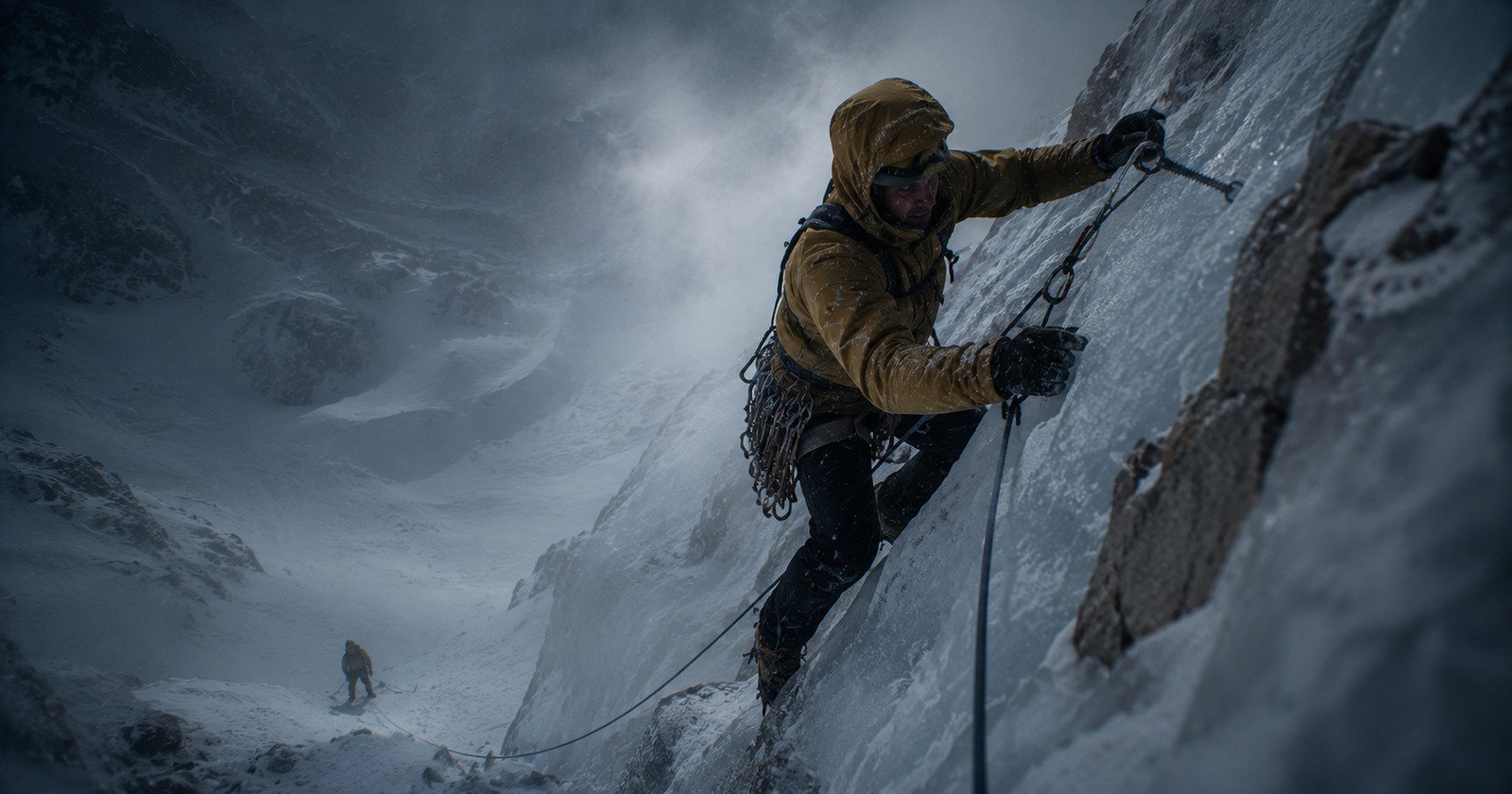
I was on a trail with friends, people I trust, people who are fit and capable and had done enough hiking to feel confident in the mountains. They naturally fell in behind me. Not because anyone discussed it. Not because I asked them to. Because I was the one with 65 polar expeditions and twelve Rainier summits, and following the expert felt, intuitively, like the safest possible arrangement.
We were maybe two hours in when I stopped and turned around.
“If I break my ankle right now, do you know where we are? Do you know the route back to the trailhead? Do you know how to trigger a rescue?”
Silence. Not the thoughtful kind. The kind that arrives when a question exposes something that has been invisible until that exact moment.
They didn’t know. Not because they were careless or unprepared. The arrangement we had unconsciously agreed to (expert in front, everyone else following) had made that knowledge unnecessary. Why memorize the terrain when the person ahead of you has it memorized? Why track your position when someone else is tracking it? The comfort of following an expert is so complete that it quietly switches off the navigation instinct in everyone behind them.
The arrangement that felt safest was, structurally, the most fragile one possible. Not despite my experience. Because of it.
The hero trap
This pattern has a corporate equivalent, and it is so common and so praised that most organizations have institutionalized it without ever examining what it actually produces.
The senior engineer who fields every critical escalation because they can solve it faster than anyone else. The VP who owns the three most important client relationships personally because the clients trust them specifically. The founder who holds all the strategic context in their head because getting it out of their head and into the organization takes time they don’t have. The executive who steps in front of every difficult problem because watching a junior team member struggle with it is slower and more painful than just handling it themselves.
Each of these behaviors looks, from the inside, like high performance. It looks like servant leadership. The capable person absorbing the hard work to protect the team from the heavy lifting. In some frameworks it would even be celebrated. Look how much this leader contributes, how indispensable they are, how completely the team can rely on them.
What it actually produces is a catastrophic single point of failure dressed up as an asset.
The senior engineer who solves every escalation has also ensured that no one else on the team has developed the pattern recognition to solve one. The VP who owns the client relationships has made those relationships structurally dependent on their continued presence. The founder carrying the strategy in their head has built an organization that cannot execute strategy without them. They are not protecting the team from the heavy lifting. They are hoarding the map. And doing it so thoroughly that when they go down, the team is standing on the side of the mountain with no idea where they are.
The cruelest version of this is that the leader usually doesn’t see it. They are not being territorial. They are being helpful. The accumulation happens gradually, one solved escalation at a time, one client call handled personally at a time, until the dependency is so structural it is invisible to everyone inside it.
The trail is when it becomes visible. The moment the expert breaks their ankle.
What the bus factor actually measures
Engineering teams have a concept called the bus factor. The number of team members who would need to be hit by a bus before the project fails. A bus factor of one means a single absence makes the project unrecoverable. Most engineering cultures treat a bus factor of one as an obvious problem to be solved through documentation and knowledge transfer.
Most leadership cultures treat it as a sign of an irreplaceable leader.
The same condition that would trigger immediate remediation if it occurred in a codebase is celebrated when it occurs in a person. It gets called expertise, or leadership presence, or being a linchpin. Retention bonuses go to these people. Organizations get built around their continued availability. And the question never gets asked: what happens if they break their ankle?
The answer, in most cases, is exactly what happened to my friends on the trail. Not panic, necessarily. Something quieter and more dangerous: paralysis. The competent, capable people who have been following the expert suddenly discover that they don’t know the route, don’t know their position, and have no framework for making decisions in the expert’s absence. Not because they lack the ability. Because the arrangement never required them to develop it.
Forcing the map
The intervention is simple to describe and genuinely uncomfortable to execute.
Step to the back of the line. Deliberately, visibly, while you are still healthy enough to catch mistakes.
On the trail, this means letting someone else navigate and biting your tongue when they take a slightly suboptimal line. Because the slightly suboptimal line they navigate themselves is worth infinitely more than the perfect line they follow you along. The friction of their own uncertainty, the experience of making a decision and seeing its consequences, the minor course corrections they make in real time, these are the processes that build genuine navigation competence. None of them happen when you are in front.
In the organization, this means forcing junior leaders to run the critical client meeting while you observe from the back of the room. It means making the team build the quarterly strategy instead of presenting them one to react to. It means letting the mid-level engineer own the escalation, failing if necessary, and debriefing it afterward. Rather than absorbing it yourself in the name of speed and quality.
It will be slower. This is not a side effect. It is the mechanism. The slowness is where the learning lives. A team that has navigated a difficult client conversation without you knows something true about how to do that. A team that watched you navigate it knows something true about how you do it, which is an entirely different and significantly less useful piece of knowledge.
The senior leader’s job, done correctly, is not to be the best navigator on the team. It is to produce the largest possible number of capable navigators. These are not the same objective, and optimizing for the first one actively destroys progress toward the second.
The test for whether you are doing this right is uncomfortable. If you stepped to the back of the line today (not announced your retirement, not been eliminated, just moved to the observer position) would the team know how to move? Would they know the route, their current position, the decision framework for the next hard choice?
If the answer is no, you have not built a team. You have built a dependency.
The Team Test
You lose cell service tomorrow. Complete blackout, no calls, no Slack, no email, for thirty days. The project continues without you.
Don’t answer abstractly. Walk it forward specifically. The client meeting that’s scheduled for next Thursday. The product decision that’s been escalating toward you all week. The strategic question that’s been sitting in your inbox waiting for your input. The quarterly forecast that only you fully understand.
Would your team know how to navigate those, or would they freeze on the side of the mountain waiting for you to come back and tell them where to step?
If they would freeze, the problem isn’t their capability. They are capable, you chose them. The problem is architectural. You have been navigating in front for so long that the map only exists in your head.
The most dangerous thing about being the most experienced person on the team is that your presence makes everyone around you feel safe. That feeling of safety, real, earned, completely understandable, is quietly switching off the navigation instinct in everyone behind you.
Step to the back of the line. Do it now, while the terrain is manageable and a mistake is recoverable. Because the only way to find out if your team can navigate without you is to make them navigate without you. And you want to discover the answer on a clear day at low altitude.
Not when the weather turns. Not when you are down.