If you have ever brought a frustration into a meeting that belonged in your internal processing and watched the room quietly navigate around it, this piece is for you. What you owed the team in that moment was not the performance of positivity. It was a specific cognitive practice that most professional environments never name.
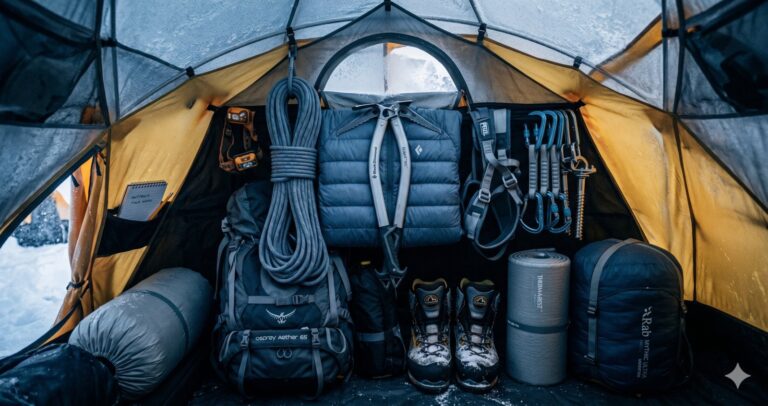
By day four I was angry about the tea.
Not genuinely angry. The anger was the surface expression of something more diffuse and less reasonable. Accumulated physical discomfort, sleep disruption, the particular cognitive fog of sustained cold, the frustration of enforced inactivity, and the low-grade social friction of four days in a confined space with people who had ceased to be novel company.
The tea was irrelevant. It was the nearest available object for a feeling that had nothing to do with it.
I did not say anything about the tea.
This is what expedition behavior looks like in practice. Not the performance of positivity, the forced cheerfulness that everybody in the tent can read as false and that adds the additional irritation of transparent emotional management to the existing discomforts. Not the suppression of the feeling, which has its own costs and eventually surfaces in worse forms. But the specific cognitive discipline of processing the feeling to the point where its expression would not cost the tent anything, before allowing it to become a word or a tone or an expression that shifts the atmospheric pressure in three square meters of nylon.
This discipline is not soft. It is one of the most demanding practices I know. More demanding, in many contexts, than the technical climbing skills that get more attention in the expedition literature. The mountain will test your physical capability. Four days in a storm will test whether you have developed the internal discipline to manage your own experience before it becomes everyone else’s problem.
What expedition behavior is not
The NOLS concept of expedition behavior is frequently misunderstood as a demand for performed positivity. The instruction to be cheerful, to keep morale high, to project confidence and energy regardless of internal state. This misunderstanding produces exactly the wrong behavior. The teammate who performs wellness while visibly deteriorating, whose management of their own emotional state has become more exhausting for the team than the emotional state itself would have been.
Expedition behavior is not performed positivity. It is the specific discipline of distinguishing between the experience you are having and the burden you are choosing to impose on the team by expressing it.
Some experiences are appropriate to share. The genuine safety concern that needs to be named. The physical symptom that requires the team to adjust. The strategic doubt that the team needs to hear because it might change the decision. These are not personal impositions. They are information the team requires.
The experience that is not appropriate to share is the one that would infect the tent without adding information. The irritation that is about the storm rather than about the team. The frustration that is about the accumulated cost of the previous three days rather than about any current decision. The anger about the tea.
The discipline is in developing the capacity to make the distinction. To ask, before speaking, whether what you are about to say adds information or adds burden, and to process the burden internally before it becomes atmospheric.
“Expedition behavior is the specific discipline of distinguishing between the experience you are having and the burden you are choosing to impose on the team by expressing it.”
The organizational tent
Every sustained high-pressure team environment is a tent.
The six-week product sprint. The twelve-month startup. The post-acquisition integration that runs longer than anyone planned. The crisis response team that has been operating in emergency mode for a month. In each of these environments, the team is in the tent. Confined by shared obligation, unable to fully decompress between interactions, accumulating the low-grade social friction that comes from sustained proximity to the same people under sustained pressure.
In these environments, the individual behavioral discipline of expedition behavior becomes load-bearing for the collective. The team member who processes their frustration internally before it becomes a tone does something real for the people around them. The person who says what they mean without adding the weight of what they are feeling creates communication that the team can actually use.
This is distinct from the leader’s architectural role, the tent ecology management discussed in The Architecture of the Tent. That piece is about what the leader builds. This piece is about what each individual in the tent is responsible for bringing and managing.
The leader cannot do this for the team. They can create the conditions that make it easier. But the individual practice, the capacity to hold the anger about the tea until it has processed to the point where it no longer needs saying, belongs to each person.
The three practices
Expedition behavior in practice is not a disposition. It is three specific cognitive habits that can be developed.
The first is the pause before expression. Before speaking from a negative internal state, the specific question: is what I am about to say information or burden? If it is information, name it. If it is burden, process it first.
The second is the distinction between the experience and its cause. In a tent, the anger is almost never actually about the tea. In an office, the frustration is almost never actually about the meeting that was scheduled over lunch. The person who has developed expedition behavior asks “what is this actually about?” before expressing it. Which usually reveals that the cause is something larger and less immediate than the trigger, and therefore something that does not require an immediate response.
The third is the practice of resolution before re-entry. After processing a difficult internal state, through whatever method works, checking whether the state has actually resolved before re-engaging. Not “have I suppressed this?” but “have I processed this to the point where I can be fully present rather than managing my own experience while pretending to attend to someone else’s?”
These three practices are not easy. They require the same kind of deliberate training that technical climbing skills require. And like technical climbing skills, they are most useful precisely in the conditions that make them hardest to apply.ost useful precisely in the conditions that make them hardest to apply.
THE TEAM TEST
Think about the last time you brought something into the tent that belonged outside it. The frustration that showed up as a short response in a meeting, the irritation that showed up as an edge in an email, the anxiety that showed up as excessive detail in a conversation that required brevity.
Not a crisis. A weather event. Something that was real and valid but that belonged in your internal processing rather than in the shared space.
Now ask: what was the cost to the people around you? Not the cost of the feeling. The cost of the expression. The slight atmospheric shift that required them to navigate around your state rather than engaging with the work.
And then ask the harder question. What would it take to develop the capacity to hold that until it had processed to the point where it no longer needed to be said?
The storm is not personal. Neither is the tea.