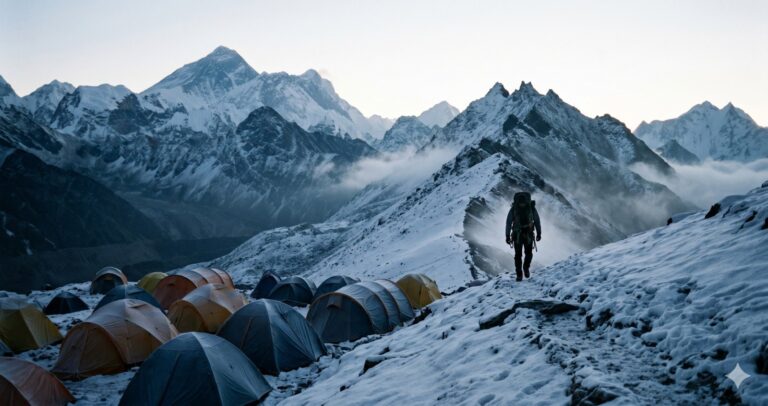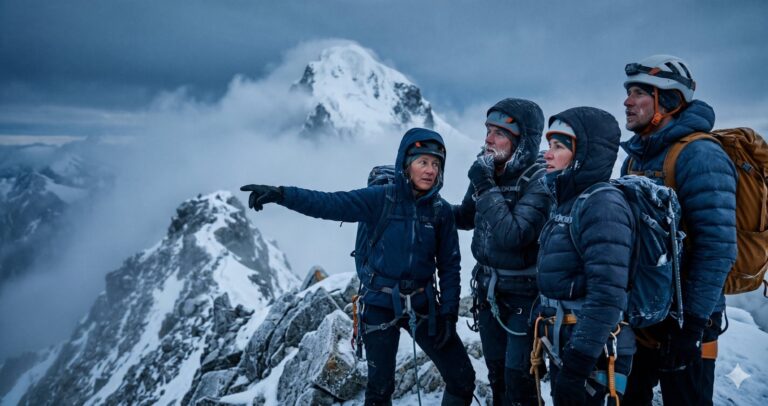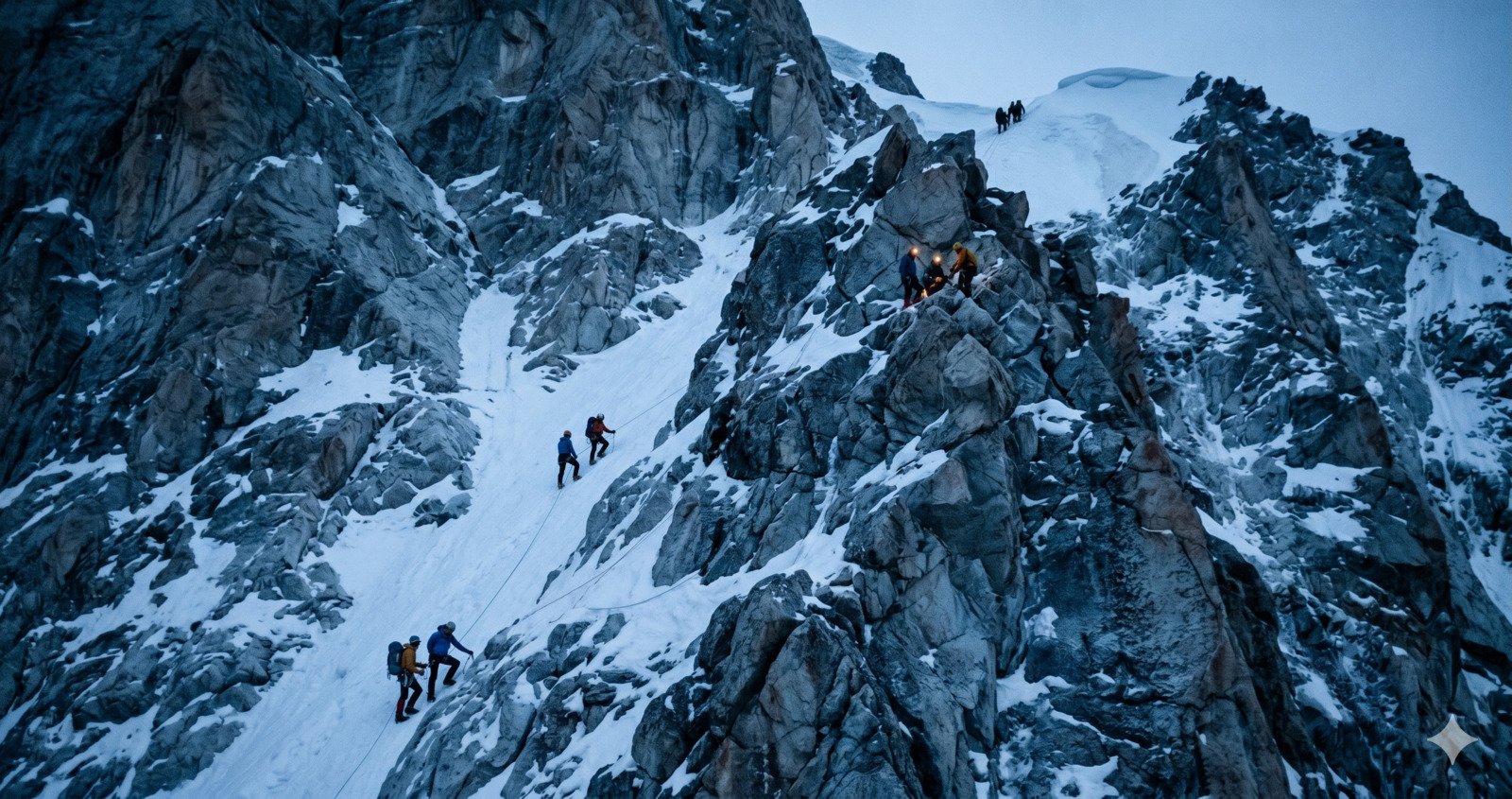
I stood on the ridge and waited for a bell.
It was lunch, I think. The bell from the whaling station at Stromness that Shackleton, Worsley, and Crean had used as their navigation target after thirty-six hours crossing the unmapped interior of South Georgia. They had heard it from this ridge, or somewhere near it, after a night descent that should have killed them and didn’t. They had been on the ice for almost two years. They were frostbitten, exhausted, wearing clothes that had not been changed since the Endurance went down. Their beards had grown into something that the whaling station workers, when they finally arrived, initially refused to believe were human faces.
I stood there in waterproof gear on a reasonable day and thought about their teeth.
My father was a dentist. My brothers are dentists. The specific condition of three men’s teeth after twenty-two months of ship’s biscuit, penguin meat, and no dental care whatsoever is the kind of detail that lands differently when you have that professional frame of reference. It is also the kind of detail that the leadership literature never mentions, because the leadership literature is not interested in what the Endurance expedition actually was. It is interested in what Shackleton symbolizes.
This is the problem.
The Shackleton case has been taught in business schools for decades as a study in leadership character. In optimism, in charisma, in the capacity to maintain morale under impossible conditions. “Shackleton’s Way” is a personality study. It produces the instruction: be like Shackleton. Be inspirational. Be caring. Project confidence. Lead from the front.
This instruction is not wrong. It is insufficient. And its insufficiency has caused a century of analysis to miss the most important organizational lessons in the case.
What Shackleton actually did was design four teams. Sequentially, under compounding constraint, with irreversible consequences at each decision point. And design them correctly. The men survived not because Shackleton was a good person. They survived because the organizational architecture he built under conditions of total environmental hostility was structurally sound.
The personality is interesting. The architecture is what saved them.
The advertisement
The story begins before the Endurance left port, with a decision that the leadership literature treats as an inspirational anecdote and should treat as an organizational design case.
The advertisement Shackleton placed for crew, whether he placed it in exactly the words that have been attributed to him is disputed, but the substance is documented, offered hazardous work, low wages, long months of darkness, and safe return uncertain. Five thousand people applied.
This is not a story about Shackleton’s appeal or the romance of exploration. It is a story about self-selection as an organizational design instrument.
The advertisement did something that most hiring processes explicitly avoid. It named the worst-case scenario before the candidate committed. The person who read “safe return uncertain” and applied anyway had already performed a private Pre-Mortem. They had imagined the failure state, assessed their willingness to accept it, and decided to proceed. They arrived at the expedition pre-committed to the downside in a way that no amount of onboarding or team-building could subsequently produce.
The organizational implication is precise. The composition of a team is determined before it is assembled, by the conditions under which people choose to join it. A team recruited under false optimism will discover the actual conditions in the field and recalibrate. A team recruited under honest assessment of the worst case has already done that recalibration before they arrived. These are structurally different teams.
There was a stowaway. Perce Blackborow hid in a locker and was discovered at sea, when turning back was no longer an option. Shackleton’s response has been reported as threatening. He told Blackborow that if the expedition ran out of food, stowaways would be the first to be eaten. What happened next is more instructive. Shackleton made Blackborow the expedition cook.
This is organizational design under constraint. The stowaway cannot be removed. He is now a team member whose presence was not planned for and whose role does not exist. The response is not punishment and not tolerance. It is role creation. The system disruption is converted into a functional position. Blackborow cooked for the expedition until frostbite took three of his toes on Elephant Island. He was nineteen years old.
The four teams
The conventional Shackleton narrative has one protagonist and one team. This is wrong on both counts.
There were four teams, five if you count precisely, and the organizational design of each one was a distinct decision made under specific constraints with irreversible consequences. Understanding why the expedition survived requires understanding all four.
Team one: the Endurance
Twenty-eight men selected through a process that Shackleton controlled more carefully than the legend suggests. The composition was deliberate. Scientists, sailors, and craftsmen whose specific technical capabilities were known quantities. Frank Wild, who would command the Elephant Island group, was chosen because Shackleton had worked with him on previous expeditions and knew his specific capabilities under pressure. Frank Worsley, the navigator, was chosen because his celestial navigation skill was exceptional. A capability that would determine survival or death on the James Caird crossing more than any other single factor.
The team was not assembled for the expedition as originally planned. It was assembled for the expedition that the expedition became. Shackleton could not have known this at the time. But the people he chose turned out to be precisely the people the actual situation required. Which is either extraordinary luck or a specific selection philosophy. A preference for capability over credential, for demonstrated performance under pressure over impressive background.
Team two: Elephant Island
When the James Caird launched on April 24, 1916, twenty-two men were left on Elephant Island under Frank Wild’s command. They had no communication with the outside world. They had no certainty that rescue was coming. They had two upturned lifeboats as shelter, a beach the size of a modest garden, and the knowledge that Shackleton had crossed 800 miles of the Drake Passage in a 22-foot lifeboat to attempt to reach South Georgia.
They waited for four months and five days.
What held them together is the most important organizational question in the case, and the answer is not morale or optimism or trust in Shackleton. The answer is architecture.
Before leaving, Shackleton made three specific structural decisions about the Elephant Island group. He left Frank Wild in command with explicit authority. Not shared authority, not collective decision-making, but clear command that Wild exercised without reference to Shackleton. He established behavioral norms that Wild maintained throughout the wait. Daily routines, work assignments, the maintenance of formal structures when informality would have been easier. And he distributed the men into tent groups that he had chosen deliberately. Mixing personalities, separating combinations that had shown friction, creating configurations that were more stable than the ones the men would have chosen themselves.
Wild woke the men every morning with the announcement that today might be the day. “Get your things ready, boys.” Regardless of whether there was any evidence that rescue was imminent. He did this for four months. By the time the Yelcho appeared on August 30, the men were ready to leave in under an hour.
This is expedition behavior at the organizational level. The maintenance of readiness in conditions of total uncertainty about whether readiness will ever be required.
“The personality is interesting. The architecture is what saved them.”
Team three: the James Caird
The selection of the six men who would cross the Drake Passage with Shackleton is the most structurally interesting decision in the entire case, and the one that the conventional analysis almost always gets wrong.
Shackleton did not select the six strongest men. He did not select the six best sailors. He selected the six men whose presence on Elephant Island would have been most corrosive to the twenty-two who remained.
John Vincent was a bully who had caused problems throughout the expedition. Harry McNish, the carpenter whose skill had made the James Caird seaworthy, had challenged Shackleton’s authority on the ice and the challenge had never been fully resolved. These men were not chosen for the crossing because they were the best choice for the crossing. They were chosen for the crossing because leaving them on Elephant Island would have damaged the group that had to wait.
This is simultaneous system optimization. A decision that accounts for the configuration of both groups at once rather than optimizing one at the expense of the other. The James Caird crossing was survivable with this crew. The Elephant Island wait was more survivable without them. Shackleton chose the configuration that maximized total system survival rather than the configuration that maximized any individual component.
McNish was not finished contributing. His modifications to the James Caird, raising the sides, adding ballast, improvising a covering that made the boat survivable in Drake Passage conditions, were the technical decisions that made the crossing possible. The man who had challenged Shackleton’s authority on the ice built the boat that saved everyone.
The dogs
Somewhere in the months on the ice, before the boats were launched, the dogs were killed.
They had been companions for more than a year. They had names. The men knew them individually. The decision to kill them was made because there was not enough food to sustain them on the crossing, and because feeding them further was consuming resources that the men would need.
Shackleton made this decision at the strategically correct moment. Not when he could no longer avoid it, but when the calculation became clear. Every day the dogs lived past that window was a day of resource consumption that could not be recovered.
The men who killed dogs they had known for a year and then used those resources to survive are not in the leadership literature. They are in the actual record of what survival under compounding constraint requires. The sentiment is real. The decision is structural. The capacity to hold both simultaneously, to grieve the dogs and make the correct call, is what the leadership literature means when it says “hard decisions” without specifying what makes them hard.
Team four: the crossing
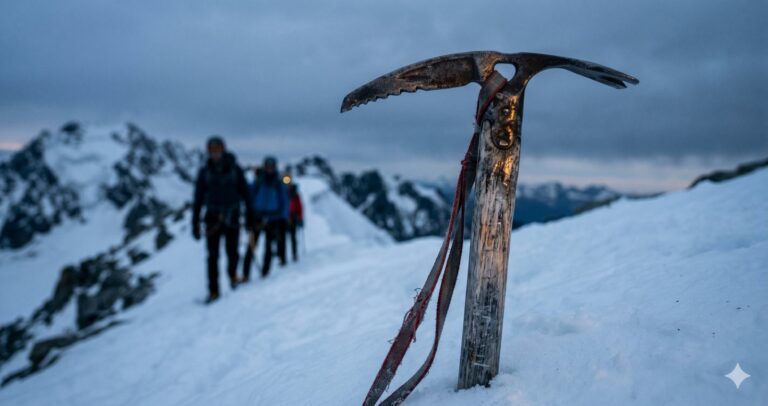
Shackleton, Worsley, and Crean left King Haakon Bay on May 19, 1916, with a carpenter’s adze for an ice axe, fifty feet of rope, and Worsley’s navigation. They crossed the Allardyce Range in thirty-six hours without stopping.
I have done the Shackleton hike in reasonable conditions with proper waterproof gear. I have stood where they stood.
The crossing is approximately 32 kilometers. The terrain is not technically extreme by modern mountaineering standards. The route avoids the most difficult ground, following ridgelines where possible and descending valleys where the ridgelines become impassable. What makes it remarkable is not the technical difficulty. It is the conditions under which it was completed. Two years of physical depletion, equipment improvised from survival gear, no knowledge of the route, and the specific cognitive state of men who understood that if this crossing failed, twenty-five men on Elephant Island would die waiting for a rescue that would not come.
There is a waterfall that Shackleton described in his account of the crossing. I have stood below it. He described it as a landmark, something Worsley used to confirm their position on a route that had no other fixed reference points. The waterfall is still there. The water falls the same way.
The waterfall described by Shackleton during the crossing of South Georgia. Photograph: Thomas Kokta.
I stopped on the ridge above Stromness. Stromness has been abandoned for decades. There is no bell now, and hasn’t been for a long time. You can stand where they stood. You cannot hear what they heard.
The conditions were different. The gear was different. The teeth were in better shape.
The relief they felt when that bell sounded is not available to anyone who walks the route now. It exists only in the record. In Worsley’s account, in the photograph of three men who had been on the ice for two years arriving at a door and being asked to leave before they were cleaned up. The experience cannot be replicated. The terrain can.
The fifth team
Three men stayed at King Haakon Bay with the James Caird while the other three crossed. McNish, McCarthy, and Vincent. Their role in the outcome was zero. They could not influence the crossing. They could not influence the rescue. They maintained the boat, in case a second attempt was needed if the crossing failed, and waited in conditions almost as extreme as Elephant Island.
They are almost never discussed. They have no narrative function in the conventional account because they did nothing that moved the story forward.
This is the most instructive omission in the Shackleton literature. The three men at King Haakon Bay demonstrate expedition behavior in its purest and most demanding form. Managing your own experience in conditions of total uncertainty about whether your presence has any consequence at all. They were not waiting to be useful. They were waiting in case they were needed. The distinction is the difference between a role with a purpose and a role with a contingent purpose. Maintaining functional behavior in the latter is harder than the literature acknowledges.
McNish never forgave Shackleton for leaving him off the Polar Medal awarded to the other survivors. He believed, and the historical evidence supports his position, that Shackleton punished him for the authority challenge on the ice by excluding him from the formal recognition, despite the fact that McNish’s carpentry had made the crossing possible. He died in Wellington, New Zealand, in 1930, and was buried in a pauper’s grave.
The system that saves you is sometimes built by the person the system subsequently fails. This does not resolve cleanly. It is not supposed to.
Grytviken
Ernest Shackleton died on January 5, 1922, on South Georgia Island, of a heart attack. He was forty-seven years old. He had just arrived on the Quest, the ship for his fourth Antarctic expedition, and had not yet begun.
His wife asked that he be buried on South Georgia. He is interred at Grytviken, the whaling station a few miles from Stromness. From the ridge, from the waterfall. I have visited his grave many times.
He died on his way to another expedition. Not in retrospective wisdom about the Endurance. Not teaching the case in business schools. On a ship, about to go somewhere.
The four teams he designed survived because the architecture was sound. The architecture was sound because Shackleton understood something that the leadership literature has spent a century converting into personality traits and inspirational anecdotes. That the survival of a system under extreme constraint is a design problem, not a character problem. You solve it before the pressure arrives, with the decisions you make about who is in which team and why, with the structures you build before you leave and the norms you establish before you can no longer enforce them.
He never stopped designing. He was about to begin again when the heart gave out.
The waterfall still falls. The grave faces south.
And twenty-five men came home from the ice.