If you have a decision sitting on your desk that everyone in the room privately knows is the right call, but nobody is willing to make it irreversible, this piece is for you. What you have isn’t a hard call. It is an accumulating cost you are not accounting for because the irreversibility feels like the risk.
We summited at sunset.
Not by design. We had run late on the route, the kind of slow accumulation of small delays that happens on technical climbs and that you never quite notice until you look up and the light has changed. The top of Devil’s Tower at sunset is one of the more extraordinary things I have seen on any climb. The high plains of Wyoming spreading out in every direction, the light going red and gold, the rock warm under your hands after a day of holding it. We took a moment. We should have taken less of one.
By the time we started the rappel, the moon was rising. Full moon, which matters to what came next. We set the double ropes, tested the anchor, and went over the lip.
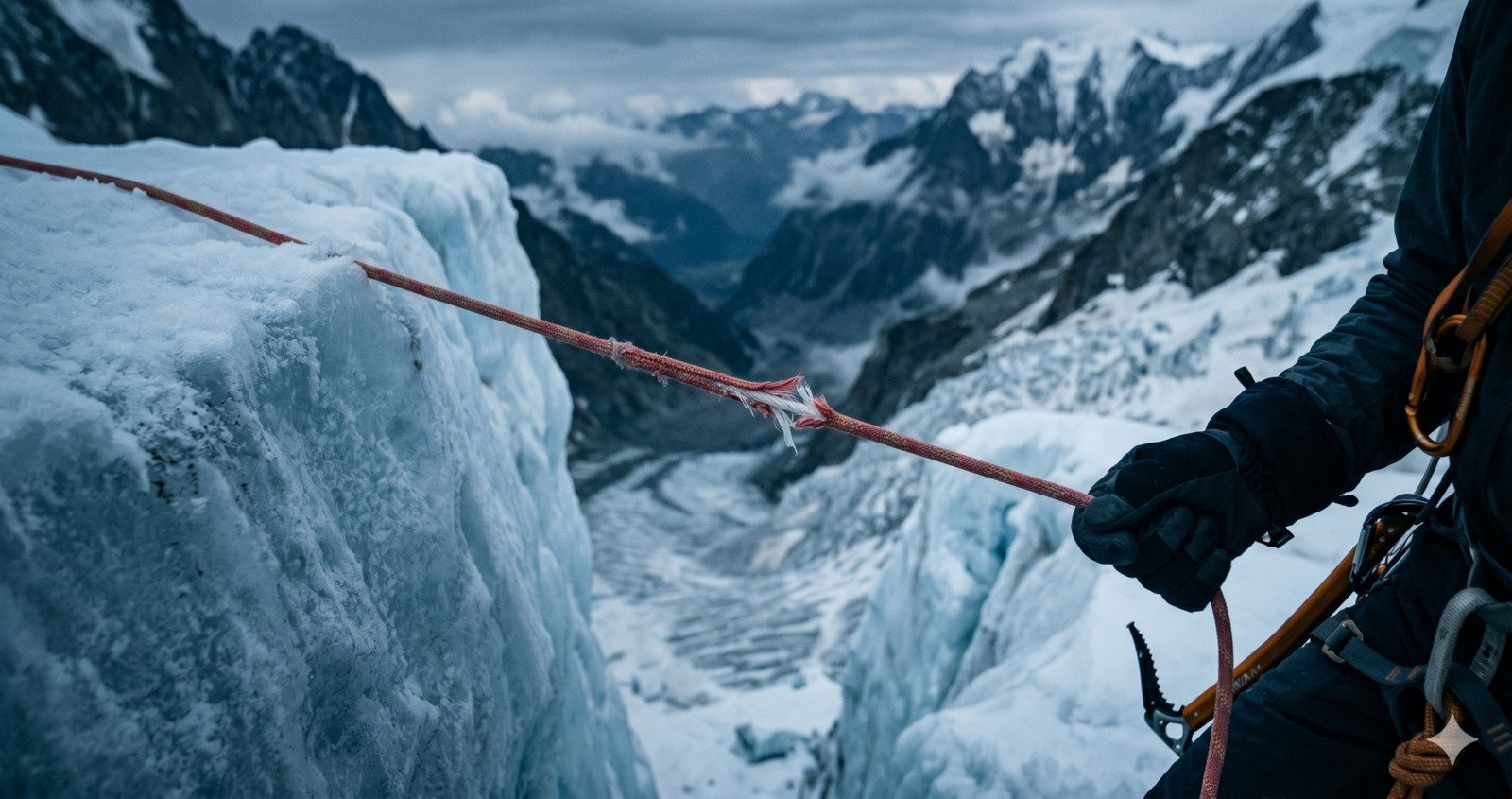
The rope got stuck on the pull.
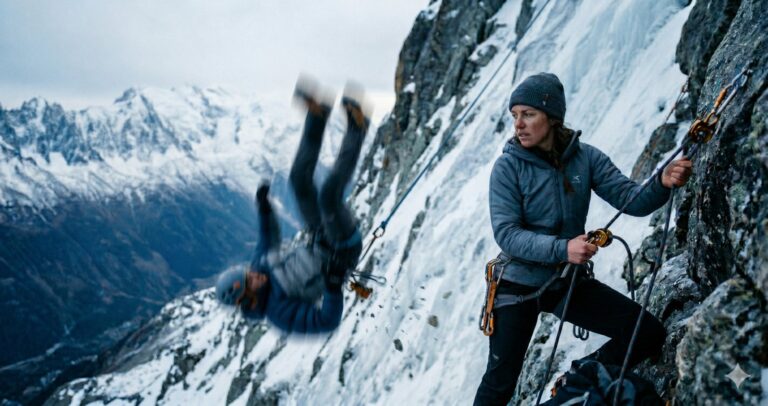
If you have rappelled you know this moment. You are down, you are safe, you give the pull cord the tug that should send the rope sliding through the anchor and down to you. Instead: resistance. You pull again. The rope moves slightly and then stops. You pull harder. Nothing.
There are options at this point, none of them comfortable. You can ascend back up the rope and free it, possible but slow, and we were already in the dark on a technical route with a long approach back to the car. You can keep pulling in different combinations and hope for a lucky release, possible but increasingly unlikely and increasingly time-consuming. Or you can cut it.
I looked at the remaining rope. I looked at the face below us in the moonlight. I made the calculation.
I cut it.
We rappelled off on the remaining length and got down safely. But I want to be precise about something. When I cut that rope, I did not know with certainty that the remaining length would reach the next station. I knew with enough confidence to act. Those are not the same thing, and the difference between them is the actual subject of this piece.
Not decisiveness. Something more specific
Every leadership seminar, every executive coach, every business book in the genre of “lessons from extreme environments” will tell you some version of the same thing. Be decisive. Make the call. Commit.
This is not that.
Decisiveness is a disposition. A willingness to act rather than defer. What happened on that rock face was a different cognitive operation. It was a specific calculation about the relationship between three variables: the cost of the irreversible action, the cost of the alternatives, and the quality of information available to assess both. The calculation produced a result that justified cutting, and I cut. A different set of variables might have produced a different result.
The leadership literature conflates these two things because “be decisive” is a transferable aspiration and the specific calculation is not. You can tell someone to be more decisive in a keynote. You cannot easily teach them to correctly assess the relationship between irreversibility, alternatives, and information quality under pressure. Because that skill lives in the body rather than the mind. It is built through repeated exposure to decisions that actually cost something.
What I want to make precise here is the framework, because it is more useful than the aspiration.
The irreversibility asymmetry
Cutting the rope was irreversible. Once I cut it, the option to pull the rope through the anchor was gone. This is the feature of the decision that most leadership frameworks treat as the cost, and stop there. Irreversibility is framed as risk, which it is. But irreversibility is also sometimes the point.
When you are on a technical climb in the dark with a stuck rope, the question is not “how do I preserve the asset?” The question is: what is the cost of not destroying it? And when you ask that question honestly, the calculation often changes.
The rope stuck is not a neutral state. Every minute spent trying to free it is a minute spent on exposed terrain in deteriorating conditions. The “safe” option (keep pulling, keep trying, avoid the irreversible cut) has a cost that accumulates in real time. The irreversible option (cut, commit, descend) terminates the uncertainty immediately. You lose the rope. You know exactly what you have left. You either have enough to get down or you don’t, and you can assess that in thirty seconds by looking at the face in the moonlight.
This is what I mean by irreversibility asymmetry. Sometimes the irreversible action reduces your total uncertainty more than the reversible alternative does. The cut doesn’t just solve the stuck-rope problem. It converts an open-ended, accumulating situation into a bounded, assessable one. And bounded and assessable is almost always better than open-ended and accumulating, even at cost.
“The cut doesn’t just solve the stuck-rope problem. It converts an open-ended, accumulating situation into a bounded, assessable one.”
The decision framework
On Devil’s Tower the calculation happened in seconds because I had the contextual knowledge to make it quickly. But the structure of the calculation is transferable. Three variables.
First: what does the irreversible action actually cost? On the rock face, half a rope. In an organization, the cost of the pivot, the shutdown, the restructuring, the exit. Name it specifically. Not “it’s expensive” or “people will be upset.” The specific, quantified cost of the irreversible action.
Second: what is the cost of the alternatives, fully accounted? This is where most leaders fail the calculation. They compare the irreversible action against an idealized version of the reversible alternative. The version where the rope comes free with the next pull, where the market recovers on its own, where the difficult person starts performing again. The honest comparison is between the irreversible action and the realistic cost of the alternatives, including the cost of time, the cost of continued exposure, and the cost of the uncertainty itself.
Third: what can you assess right now? On the rock face, the remaining rope length, the face below in the moonlight, the distance to the next station. Not perfect information. Enough information to determine whether the irreversible action is viable. The question is never “do I have certainty?” The question is “do I have enough?”
If the cost of the irreversible action is bounded and assessable, the cost of the alternatives is accumulating and open-ended, and you have enough information to determine viability, cut the rope.
What makes it reckless instead
The framework also clarifies what would have made the same decision reckless rather than calculated. If I had cut the rope in a panic, without checking the remaining length, without looking at the face below, without assessing whether the next station was reachable, that is recklessness. Not because the outcome would necessarily have been different, but because the information that justified the decision would have been absent. The cut would have been a gamble rather than a calculated bet.
The line between bold irreversible commitment and recklessness is not the outcome. It is whether the decision was made with the information that was actually available, or whether it was made in avoidance of assessing that information. Leaders who make irreversible commitments recklessly are not being decisive. They are outsourcing the anxiety of uncertainty to the outcome, and calling it courage.
The calculation I did on that ledge (rope length, face conditions, distance to station, cost of alternatives) was not courageous. It was disciplined. Courage is what got me up the tower. Discipline is what got me down.
THE TEAM TEST
Think about the last irreversible commitment your organization avoided making.
Not a decision that was genuinely too risky. A decision that was the right call, that everyone in the room privately knew was the right call, that got deferred because the irreversibility was framed as the risk rather than the cost.
Now run the calculation honestly. What does the irreversible action actually cost, specifically? What is the realistic cost of the alternatives, including the cost of continued exposure and accumulated uncertainty? And what do you already know that would allow you to assess whether the irreversible action is viable?
If the honest answer is that you have enough information and the alternatives are accumulating costs you are not accounting for, the rope is stuck and you are still pulling.
At some point on that ledge, the calculation tips. The question is whether you do the math before it tips or after.