If you have been praised for your intervention speed and are beginning to suspect that some of your interventions are destroying the outcomes they were meant to improve, this piece is for you. What you have is not a patience problem. It is the absence of a specific operational discipline that corporate leadership has almost no vocabulary for.
The photograph that ran in National Geographic was taken at 6:47 in the morning on the forty-seventh hour.
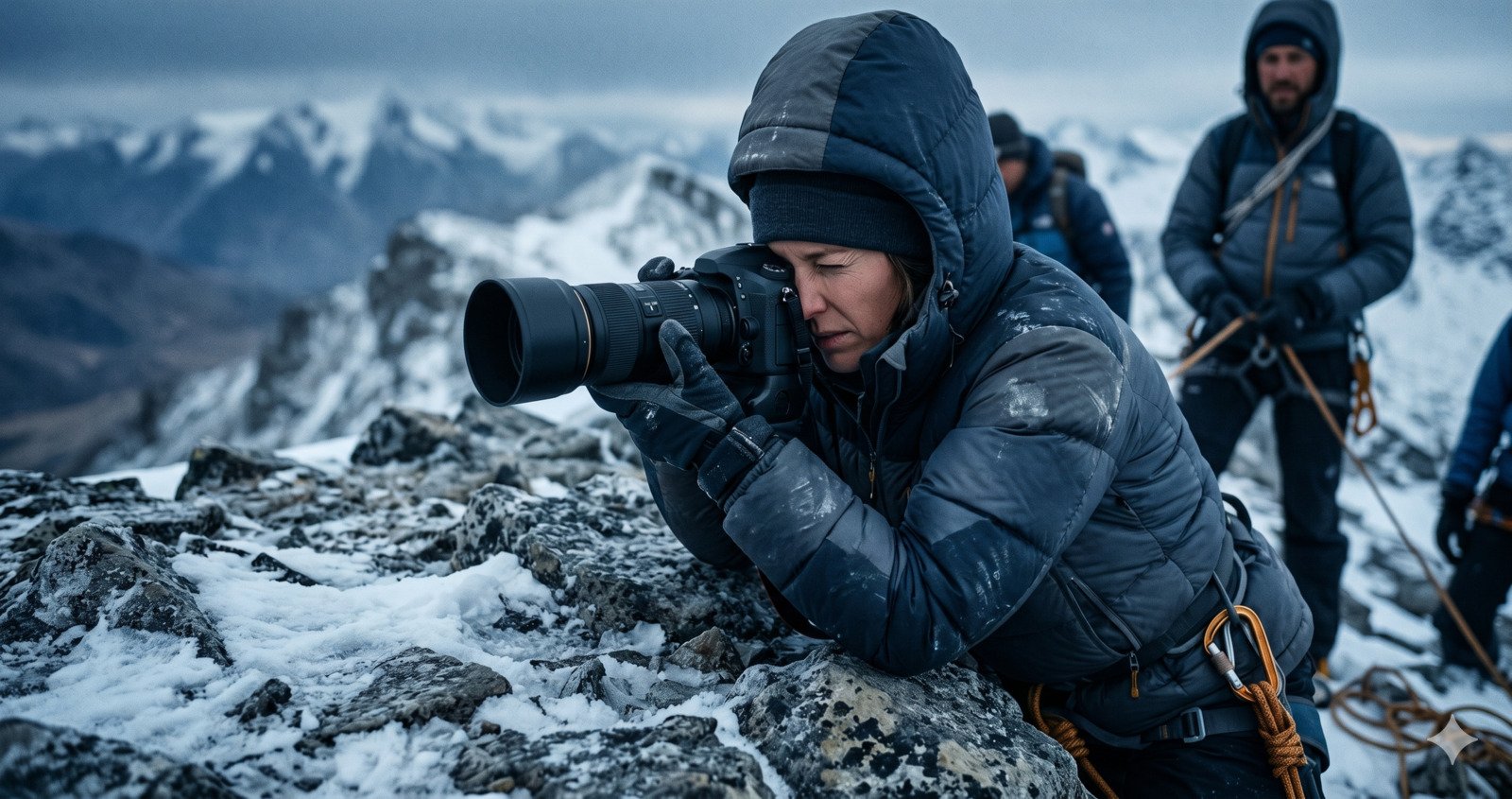
Not the forty-seventh hour of that particular shooting session. The forty-seventh hour of that particular attempt at that particular shot. Over two days and portions of three, in conditions that ranged from brutal to merely uncomfortable, at a location I had reached by a combination of Zodiac, foot travel, and a judgment call about sea ice that I would not make again, I had built the frame, calculated the exposure, learned the movement patterns of the subjects, and waited.
The photograph exists because the light changed at 6:47 on day three in a way that it had not changed in the preceding forty-six hours. And because I was there, ready, with the frame already set.
If I had intervened, if I had adjusted the composition at hour twelve because the original frame wasn’t producing results, or changed location at hour twenty-four because perhaps the shot was somewhere else, or abandoned the attempt at hour thirty-six because the conditions seemed unlikely to produce what I was after, the photograph would not exist.
The forty-seven hours were not waiting. They were preparation for a specific moment that had not yet arrived. That is a different thing entirely, and the difference is the subject of this piece.
The structure of prepared stillness
Photography in extreme environments teaches a discipline that is almost entirely absent from corporate leadership development. The discipline of the ready position.
Before I arrived at that colony, the work was already largely done. The lens was selected for the specific conditions I expected. The exposure was calculated and pre-set for the light that would exist at the moment I was preparing for, not the light that existed at arrival. The frame was composed not for the scene as it was but for the scene as it would be when the elements aligned. The technical decisions were made.
What remained was not patience in the passive sense. It was a specific kind of active alertness. Fully committed to the original preparation, scanning continuously for the signal that the prepared moment had arrived, ready to fire within fractions of a second. The opposite of relaxed. The opposite of distracted. Perfectly still on the outside and completely alert on the inside, for forty-seven hours.
The executives I work with have almost no access to this state. Their training, their organizational cultures, and the systems that evaluate their performance all push relentlessly toward intervention. The assumption embedded in most corporate activity is that more input from the leader equals better outcomes. That the leader’s job is to act, to direct, to add value through motion. Stillness reads as absence. Waiting reads as indecision. The ready position reads as nothing at all.
This is exactly backwards in the conditions where it matters most.
“The forty-seven hours were not waiting. They were preparation for a specific moment that had not yet arrived.”
When intervention destroys the shot
The most common error in wildlife photography is not technical. It is behavioral. The photographer who adjusts composition when the frame isn’t immediately productive has interrupted the very conditions that the productive moment requires. The animals have read the movement. The light that was building in the direction of the original frame is no longer relevant to the new composition. The preparation that justified the choice of location has been discarded.
In organizations, the equivalent happens whenever a leader intervenes in a developing team dynamic before it has resolved, adjusts a market strategy before the original approach has had time to produce signal, or adds input to a process that requires sustained undisturbed execution to produce its outcome.
The intervention is not necessarily wrong. It is frequently well-intentioned and sometimes correct. What it always does is interrupt the development of whatever was forming, good or bad, and reset the clock. The team dynamic that was building toward resolution now has to start again with the leader’s input as a new variable. The strategy that was accumulating evidence now has to restart from the point of intervention.
The leader has added value, visibly and immediately. The photograph no longer exists.
What the viewfinder requires
The discipline of the ready position has four components, each a genuine practice rather than a disposition.
The first is preparation so complete that the decision to act can be made instantaneously. On the ice, this means the technical work is done before the waiting begins. There is nothing left to think about except whether this is the moment. In the organization, this means the conditions for intervention are specified in advance. What would have to be true for me to step in? What is the signal I am waiting for? If the leader cannot answer those questions precisely before the waiting begins, the ready position is not ready.
The second is commitment to the original frame. The most productive photographs are rarely the ones taken from the position you moved to after the original location “wasn’t working.” The most productive team outcomes are rarely the ones produced after the leader adjusted the approach because it wasn’t visibly producing results at hour twelve. The original frame was chosen for a reason. Abandoning it before the elements have had time to align confuses the absence of the moment with the wrongness of the preparation.
The third is continuous alertness rather than passive waiting. The forty-seven hours were not hours of resting. They were hours of reading the environment for the signal that the prepared moment had arrived. The leader in the ready position is not checked out. They are monitoring precisely. Watching for the specific conditions that justify intervention without generating false signals through the monitoring itself.
The fourth is the speed of the response when the moment arrives. On the ice, the moment lasts fractions of a second. In organizations, the window is usually longer, but it is still a window. The leader who has been in the ready position and has specified the intervention conditions in advance can act immediately when those conditions are met. The leader who has been waiting without preparation has to reconstruct the decision from scratch at the moment of maximum urgency.
“The leader has added value, visibly and immediately. The photograph no longer exists.”
THE TEAM TEST
Name the situation in your organization where you are currently intervening on a cycle rather than on signal.
Not the situations where intervention is clearly necessary. The genuine crises, the clear failures, the explicit requests for input. The situations where you are adding input or adjusting the frame on a regular schedule because intervention is the default rather than because the specific conditions that justify intervention have been met.
Now ask: what would you need to see to know this moment requires your input? Name the specific signal. If you cannot name it specifically, you do not have an intervention condition. You have an intervention habit.
The light will change. The question is whether your frame is set for the moment when it does, or whether you adjusted your composition at hour twelve and are now pointed at something else entirely.