If your team is running at 120% capacity and you privately know the judgment quality is degrading but the output metrics still look fine, this piece is for you. Output is what you see. Judgment is what fails first. The organizations that sustain execution have made a structural decision about pace that most companies never make.
Watch an elite high-altitude climber move and your first instinct is to wonder if something is wrong.
They are not moving fast. They are not surging up the slope with the visible effort that signals hard work. They are moving with a deliberate, almost meditative slowness. Each step placed carefully, each movement complete before the next begins. Compared to the climber below them who is grinding upward with maximum visible effort, they look like they are barely trying.
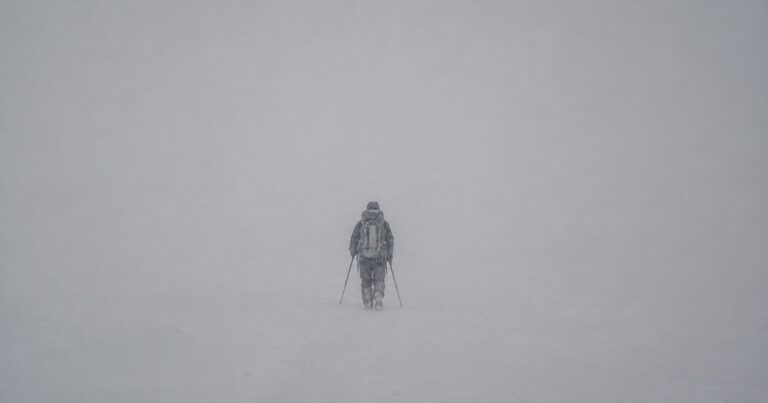
By 27,000 feet, the grinder has stopped. The elite climber is still moving.
What looks like laziness is the rest step. One of the most technically demanding skills in high-altitude mountaineering. On each step, the climber transfers their full weight to the rear leg, straightens the knee to a locked position, and takes a fraction-of-a-second pause before stepping forward. In that pause, the working muscles recover. The cardiovascular system catches up. The movement is continuous but the effort is distributed, and no muscle group ever accumulates the debt that causes a system to fail.
At sea level this technique is unnecessary. The body has enough oxygen to recover in motion. At altitude, where every breath delivers a fraction of the oxygen available at base, the rest step is the difference between reaching the summit and stopping at 26,000 feet with your body in revolt. The climber who powers through without it isn’t working harder. They are spending capital they don’t have, on a timeline that runs out before the summit.
The corporate equivalent of the rest step does not exist in most organizations. What exists instead is the grinding climber, celebrated, promoted, held up as the model of what commitment looks like.
The cult of visible effort
There is a specific pathology in organizational culture that confuses the appearance of effort with the production of results. It has many names (hustle culture, always-on expectations, the glorification of busyness) but they all describe the same underlying dysfunction. The organization has learned to reward the signal of hard work rather than the output of effective work.
The symptoms are easy to recognize. The leader who answers emails at midnight and makes sure people know it. The team that stays late not because the work requires it but because leaving on time reads as insufficient commitment. The planning process that fills every available hour with meetings because empty calendar space feels like wasted capacity. The sprint that schedules 120% of the team’s bandwidth because anything less looks like underutilization.
Each of these behaviors depletes the same resource that altitude depletes. The cognitive and physical capacity required to do the actual work. And each of them is invisible in its cost in the same way that the grinder’s unsustainable pace is invisible. Until the body stops.
The rest step is not rest. It is structured recovery built into the movement itself. The elite climber is not taking breaks from climbing. They are climbing in a way that makes the recovery continuous and invisible, which allows the movement to be sustained indefinitely. This is the architecture of laziness. Not doing less, but distributing the effort in a way that eliminates the accumulation of unrecoverable debt.
“The rest step is not rest. It is structured recovery built into the movement itself.”
What gets destroyed by grinding
The first casualty of sustained maximum effort is not output. It is judgment.
This is the insight that most organizational cultures completely miss, because output is visible and judgment is not. A team running at 120% capacity is still shipping, still attending meetings, still producing artifacts. What is degrading invisibly is the quality of the decisions being made inside all that visible activity. The risk assessment that gets shortcutted because there isn’t time. The dissenting voice that doesn’t get heard because the meeting ran long. The signal in the data that nobody noticed because everyone is too busy executing on last week’s decision to read this week’s results.
High-altitude climbers know this effect with physiological precision. At extreme altitude, the first cognitive function to degrade under oxygen debt is the capacity to recognize that your judgment is degrading. The climber who is making poor decisions because of hypoxia is usually the last person to notice. The team member who is making poor decisions because of sustained cognitive overload is in exactly the same position. And the organization that has rewarded their overload has also disabled the warning system.
The second casualty is the capacity for non-linear thinking. The rest step creates micro-intervals of recovery that serve a function beyond physical restoration. In those fractions of a second, the cognitive system processes, integrates, and sometimes produces the lateral connection that changes the route. The grinder who never rests never has those intervals. They are always executing. They are never processing. And the insight that would have changed the approach never arrives, because there was never a moment of quiet long enough for it to surface.
“The first casualty of sustained maximum effort is not output. It is judgment.”
Building the rest step in
The practical question is not whether to rest but how to build the recovery into the structure of the work rather than in spite of it.
Organizations that get this right are not the ones that mandate vacation or install ping pong tables. They are the ones that have made a structural decision about sustainable pace, and then defended it against the organizational pressure to treat every quiet period as capacity to be filled.
This looks like protected time in planning cycles that is genuinely not schedulable. It looks like meeting-free periods that are treated as seriously as client commitments. It looks like a deliberate ceiling on sprint capacity that holds even when the backlog is full. Because the backlog is always full, and the ceiling is not about the backlog. It is about the human system that processes it.
Most importantly, it looks like leadership that does not perform effort visibly. The leader who models the rest step, who leaves at a reasonable hour, who does not send emails at midnight, who creates visible gaps in their own schedule, is not being lazy. They are demonstrating the architecture of sustainable performance in the only language the organization actually learns. Behavior, not policy.
The elite climber moving slowly up the fixed line is not conserving effort. They are converting effort into distance more efficiently than anyone moving faster. The summit they reach is not despite the rest step. It is because of it.
THE TEAM TEST
Look at your organization’s relationship with pace.
Not at the policy. The wellness programs, the stated values, the slides from the last all-hands about work-life balance. Look at what actually gets rewarded. Who gets promoted: the person who delivers consistently at a sustainable pace, or the person who delivers heroically at an unsustainable one? What gets celebrated in the team meeting: the steady progress, or the all-nighter that saved the launch?
Whatever gets rewarded is what gets repeated.
Ask one more question. What would your team’s output look like if you built the rest step in? Not less work. The same work, paced differently. The recovery distributed through the movement rather than accumulated as debt to be paid at the worst possible moment.
The summit doesn’t care how hard you worked on the way up. It cares whether you arrived with enough left to make the decisions required to get back down.